Dry Needling vs Acupuncture: What's the Difference?
If you’ve ever looked into treatment for muscle tension, pain or movement problems, you may have come across both dry needling and acupuncture.
At first glance, they can look almost identical.
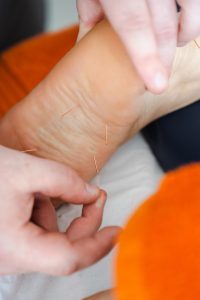
Both use very fine needles. Both involve placing needles into specific areas of the body. Both can be used as part of a wider treatment plan.
So what’s actually the difference?
It’s a question we hear because the treatments can appear very similar from the outside, yet they come from different traditions and are used with different treatment approaches.
At Hive Health & Well-Being Centre in Bideford, we offer both dry needling and acupuncture, so it’s important to us that people understand what they’re booking and why one approach might be recommended over another.
Neither treatment is automatically “better”. The most appropriate option depends on the individual, what you’re experiencing, your goals and the assessment carried out by your practitioner.
In this guide, we’ll look at dry needling vs acupuncture, explain how they differ, what they have in common and what you can expect from each treatment.
What Is Dry Needling?
Dry needling is a treatment technique that uses very fine, sterile needles to target specific areas of muscle and soft tissue.
It is commonly associated with musculoskeletal treatment and is often used alongside other hands-on techniques and exercise-based rehabilitation.
A practitioner may consider dry needling when someone has areas of muscle tension, trigger points or movement restrictions that form part of their overall presentation.
The term “dry” simply means that nothing is injected through the needle.
There is no medication or fluid involved.
The needle itself is the treatment tool.
Dry needling is generally used as part of a broader assessment rather than as a standalone answer to every problem.
For example, someone may come to Hive with persistent shoulder tension.
Rather than automatically deciding that dry needling is required, a practitioner can assess how the shoulder, neck and upper back are moving, discuss the person’s activities and consider what treatment approach may be most appropriate.
Dry needling may then be one part of the plan.
What Is Acupuncture?
Acupuncture is an established healthcare treatment that involves inserting very fine needles into specific points on the body.
There are different approaches to acupuncture, and practitioners may use different systems depending on their training and the reason for treatment.
At Hive, acupuncture is provided by appropriately trained practitioners and may form part of a personalised treatment plan.
People seek acupuncture for a variety of reasons, including support with pain management, wellbeing and particular health concerns.
Acupuncture can involve points away from the area where someone feels discomfort.
For example, the practitioner may choose points on different parts of the body based on their assessment and the approach they use.
This is one of the reasons that an acupuncture appointment can look quite different from a dry needling session.
Dry Needling vs Acupuncture: The Main Difference
The simplest way to understand dry needling vs acupuncture is to look at the treatment approach behind them.
Dry needling
Dry needling is generally used within a musculoskeletal approach.
The practitioner may target specific muscles or soft tissues based on an assessment of movement, muscle tension and the person’s symptoms.
Acupuncture
Acupuncture is a broader treatment system with its own theories, traditions and clinical approaches.
Depending on the practitioner’s training, treatment may involve specific acupuncture points selected according to the person’s symptoms and overall presentation.
In simple terms:
Dry needling tends to be focused on specific musculoskeletal tissues and movement-related problems, while acupuncture uses acupuncture points as part of a broader treatment approach.
There can be overlap, particularly because both treatments use fine needles and can sometimes be used with people experiencing pain or muscle tension.
However, the reasoning behind the treatment is different.
What Do Dry Needling and Acupuncture Have in Common?
Despite the differences, there are also some important similarities.
Both treatments:
- Use very fine needles
- Require appropriate practitioner training
- Involve an assessment before treatment
- Can form part of a wider treatment plan
- Are adapted to the individual
- May be used alongside other approaches
Neither should be thought of as a magic solution.
At Hive, we believe treatment works best when it fits into a bigger picture.
That might include exercise, rehabilitation, movement advice, strength training or other appropriate treatment.
For example, someone with recurring muscle tension may benefit from treatment alongside changes to their exercise programme.
Someone recovering from an injury may need progressive strengthening as well as hands-on treatment.
The needle is simply one tool.
Which Treatment Is Right for You?
This is where things become more individual.
You don’t necessarily need to decide whether you want dry needling or acupuncture before contacting us.
If you’re unsure, that’s completely normal.
Your practitioner can discuss:
- What you’re experiencing
- How long you’ve had the problem
- What makes it better or worse
- Your medical and treatment history
- Your activity levels
- What you want to achieve
From there, they can decide whether acupuncture, dry needling or another approach is appropriate.
Sometimes the answer may be neither.
That is an important part of good healthcare.
If another type of professional or treatment would be more suitable, you should be told that rather than being encouraged to book something that isn’t appropriate.
A Real-World Example: Shoulder Tension
Imagine someone who spends eight hours a day working at a computer.
Over several months, they’ve developed tightness around their neck and shoulders.
They’ve tried stretching but haven’t noticed much difference.
They may assume they need a massage or acupuncture.
However, the first step should be understanding what’s happening.
The practitioner may look at:
- Shoulder movement
- Neck movement
- Upper back mobility
- Work habits
- Exercise levels
- Strength
- Previous injuries
If appropriate, dry needling could be considered as part of the treatment.
Alternatively, acupuncture may be appropriate depending on the practitioner’s assessment and treatment approach.
The person may also be given exercises or advice to help address the factors contributing to the problem.
This is why the assessment matters more than simply choosing a treatment from a list.
A Real-World Example: Staying Active With Persistent Pain
Another example might be someone who has experienced ongoing discomfort that has gradually affected their confidence.
They’ve stopped going to the gym, reduced their walking and are becoming increasingly cautious about movement.
In this situation, treatment may be only one part of the answer.
Acupuncture or dry needling could potentially be incorporated into their plan, but rebuilding strength and confidence may also be important.
This could involve a gradual return to exercise and a programme designed around their current ability.
At Hive, this is where our different services can work together.
Treatment and exercise don’t have to be separate worlds.
Is Dry Needling the Same as Trigger Point Therapy?
Not exactly.
You may hear the term “trigger point” used when discussing muscle tension.
A trigger point is generally described as a sensitive area within a muscle that may be associated with pain or tenderness.
Dry needling can be used to target specific areas of muscle, including areas identified as trigger points.
However, trigger point therapy itself can involve hands-on techniques and does not necessarily involve needles.
This is another reason why treatment terminology can become confusing.
The important thing is understanding what your practitioner is recommending and why.
Does Dry Needling or Acupuncture Hurt?
This is probably one of the first questions people ask.
The needles used are extremely fine, so the sensation is usually very different from having an injection or having blood taken.
Some people feel very little when a needle is inserted.
Others may notice a brief sensation or a feeling of pressure.
With dry needling, some people may experience a stronger local muscle response depending on the technique being used.
Your practitioner should explain what you’re likely to feel and give you the opportunity to communicate throughout the session.
You should never feel that you have to tolerate something simply because you think treatment is supposed to be uncomfortable.
Common Myths About Dry Needling vs Acupuncture
Myth 1: They Are Exactly the Same Treatment
They may look similar because both use fine needles, but the treatment philosophies and clinical approaches are different.
Understanding the reason behind the treatment is more useful than simply looking at the equipment being used.
Myth 2: Dry Needling Involves Injecting Something
It doesn’t.
The term “dry” refers to the fact that no medication or other substance is injected through the needle.
Myth 3: Acupuncture Is Only About Relaxation
Acupuncture is used in a variety of healthcare settings and for different reasons.
It shouldn’t simply be viewed as a relaxation treatment.
Myth 4: You Have to Choose Your Treatment Before You Arrive
You don’t.
If you’re unsure whether acupuncture or dry needling is appropriate, speak to the practitioner about what you’re experiencing.
The assessment should help determine the most suitable approach.
What Happens During Your Appointment at Hive?
Your appointment will begin with a conversation about what you’re experiencing and what you would like help with.
Depending on the treatment, your practitioner may also carry out an assessment.
This can help establish:
- What you’re experiencing
- Your current movement or function
- Relevant medical or treatment history
- Your goals
- Whether the chosen treatment is appropriate
If acupuncture or dry needling is recommended, the practitioner will explain what they are going to do before treatment begins.
You’ll have the opportunity to ask questions and discuss anything you’re unsure about.
After treatment, you may also receive advice about what to do afterwards and whether other forms of treatment or exercise could be useful.
Can Acupuncture and Dry Needling Be Part of a Bigger Plan?
Yes.
This is an important part of the way we work at Hive.
A person experiencing pain or movement difficulties may benefit from more than one service.
For example, someone might have:
Treatment → Exercise → Strength → Confidence → Return to activity
Depending on their circumstances, that could involve acupuncture, dry needling, soft tissue therapy, exercise rehabilitation or personal training.
This approach is particularly useful when the goal isn’t simply to feel better for a short period, but to help you become more capable and confident in everyday life.
You can also read our guide on [Soft Tissue Therapy vs Physiotherapy] to understand how another form of treatment differs from the services we offer.
Why Choose Hive Health & Well-Being Centre in Bideford?
At Hive, we understand that choosing a treatment can sometimes feel confusing.
There are different therapies, different practitioners and plenty of information online.
Our approach is to keep things straightforward.
We want to understand you first.
What are you trying to achieve?
What is stopping you?
What have you already tried?
What would getting back to normal look like for you?
From there, we can help identify an appropriate route.
Based in Bideford, Hive Health & Well-Being Centre supports people from across North Devon with a range of treatment, rehabilitation and exercise services.
Whether you are looking for dry needling in Bideford, acupuncture, sports massage, soft tissue therapy or exercise rehabilitation, our team can help you understand your options.
Frequently Asked Questions
Is dry needling the same as acupuncture?
No. Although both use fine needles, they come from different treatment approaches. Dry needling is generally focused on musculoskeletal tissues, while acupuncture uses acupuncture points as part of a broader treatment system.
Which is better: dry needling or acupuncture?
Neither is automatically better. The appropriate option depends on your individual circumstances, goals and assessment.
Can I have dry needling if I don’t exercise?
Yes. Dry needling is not exclusively for athletes. It may be considered for a range of musculoskeletal concerns, depending on the individual assessment.
How many acupuncture sessions will I need?
There isn’t one set number that applies to everyone. Your practitioner can discuss your situation and the approach they recommend.
Can acupuncture or dry needling be combined with exercise?
Yes. Treatment can often form part of a wider plan that includes appropriate exercise, rehabilitation and movement advice.
Final Thoughts
If you’ve been searching dry needling vs acupuncture, you’re certainly not alone.
Although the two treatments can look very similar, they are based on different approaches and may be used for different reasons.
The best treatment isn’t necessarily the one that sounds most familiar or has the most impressive claims. It’s the one that makes sense for your individual situation.
At Hive Health & Well-Being Centre in Bideford, we take time to understand what you’re experiencing before recommending an approach.
Whether acupuncture, dry needling, soft tissue therapy, sports massage or exercise rehabilitation is appropriate, our aim is to help you understand your options and take the next step with confidence.
If you’re unsure which treatment is right for you,
with Hive Health & Well-Being Centre in Bideford and speak to our team about your needs.