Dry Needling Bideford: The Complete Guide
Muscle tension can affect more than just how you feel
We all get tight muscles from time to time.
It might be your neck after sitting at a desk all day, your shoulders after a stressful week, your calves after increasing your running, or your back after spending hours gardening.
Sometimes the tightness settles down on its own. Other times, it seems to hang around.
You may notice that a particular movement feels restricted, one side feels tighter than the other, or an area keeps becoming uncomfortable despite stretching, massage or changing your activity.
This is one of the situations where Dry Needling Bideford can sometimes form part of a wider treatment plan.
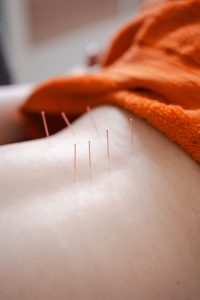
Dry needling uses very fine needles to target specific areas of muscle and soft tissue. The aim isn’t simply to put a needle into a sore muscle and hope for the best. A good treatment starts with understanding what is happening, identifying the areas that may be contributing to the problem and deciding whether dry needling is actually appropriate.
At The Hive Health & Well-Being Centre in Bideford, we use dry needling as one possible tool alongside assessment, hands-on treatment, movement and exercise.
The important point is that Dry Needling Bideford isn’t about treating a needle point on its own. It’s about using the technique as part of a bigger picture.
What is dry needling?
Dry needling is a treatment technique that uses a sterile, very fine needle to target specific tissues.
Unlike an injection, there is no medication being injected into the area. The needle is used as a physical treatment tool.
Depending on the problem being assessed, a practitioner may use dry needling to target areas of muscle that feel particularly tight, sensitive or difficult to settle.
This can include areas such as:
- Neck and upper shoulders
- Upper and lower back
- Glutes
- Hips
- Calves
- Hamstrings
- Quads
- Forearms
- Other areas of the body where muscle tension is contributing to restricted movement or discomfort
One approach you may hear about is trigger point dry needling. This involves targeting specific areas within a muscle that are particularly sensitive or tense.
The exact technique used will depend on the individual and the area being treated.
There isn’t one standard treatment that is right for everyone, which is why assessment matters.
How can dry needling help with muscle tension?
Muscles don’t always become tight for the same reason.
You might have increased tension because you’ve suddenly done more exercise than usual. You might have spent years compensating for an old injury. You might be doing repetitive work, sitting for long periods or repeatedly loading the same area during sport.
Stress can also be associated with increased muscle tension. The NHS lists muscle tension and pain among the physical symptoms that can occur with stress.
This means that simply saying “that muscle is tight” doesn’t necessarily explain why it is tight.
With dry needling for muscle tension, the aim is to work with a specific area of muscle rather than simply treating the whole body.
Some people experience a brief involuntary muscle response during treatment. Others mainly notice pressure, an ache or a strange sensation around the area being treated.
The response can vary considerably from person to person.
For some people, the most noticeable change isn’t that the muscle suddenly feels completely different. Instead, a movement that previously felt restricted may feel a little easier afterwards.
That’s where dry needling can become useful.
Muscle tension and movement are often connected
One of the reasons we don’t look at muscle tension in isolation is that muscles are there to help you move.
Imagine your shoulder feels tight every time you reach overhead.
You could simply stretch the shoulder repeatedly.
But what if the problem isn’t just flexibility?
Perhaps you’ve become protective because of previous pain. Perhaps you’re avoiding using the shoulder properly. Perhaps another part of your body isn’t contributing as well as it should.
The same applies to your back, hips, knees and other areas.
A person might say:
“My hamstrings are really tight.”
But the important question is why?
Is the muscle actually lacking flexibility?
Is it working harder because something else isn’t doing its job?
Has activity changed?
Is there a previous injury?
Is there simply a difference between how the person moves on one side compared with the other?
This is why Dry Needling Bideford should ideally be considered as part of an assessment rather than a stand-alone solution.
What does dry needling actually feel like?
This is probably one of the biggest questions people have before trying it.
And the honest answer is: it feels different from person to person.
The needles used are very fine, but you may still feel the needle entering the skin.
Once the needle is in position, you may experience:
- A small prick
- Pressure
- A dull ache
- A twitch or brief muscle response
- A sensation that feels deeper than a normal massage
- A temporary strange or heavy feeling in the area
Some areas are more sensitive than others.
The sensation can also depend on how tense the muscle is, how sensitive you are to treatment and which technique is being used.
It shouldn’t be about trying to make treatment as uncomfortable as possible.
More discomfort does not automatically mean better treatment.
At The Hive, we’ll explain what we’re doing and check how you’re responding throughout the session.
If you’re nervous about needles, tell us. There is no prize for pretending you’re comfortable when you’re not.
Why might movement feel different afterwards?
This is where the connection between muscle tension treatment and movement becomes important.
Suppose you’ve got a restricted shoulder movement.
Before treatment, you might be able to lift your arm to a certain point before it feels uncomfortable or restricted.
After treating an appropriate area, you may find that movement feels different.
That doesn’t necessarily mean the underlying problem has been permanently fixed.
Instead, it may provide a short-term change that gives you an opportunity to work on the movement itself.
This is particularly important when you’re dealing with an ongoing problem.
If treatment makes movement easier, the next step should often be to use that movement.
That might mean:
- Gentle mobility work
- Strength exercises
- Movement retraining
- Gradually increasing activity
- Working on technique
- Building confidence with movement
The NHS also recommends gradually returning to movement for many common muscle and joint problems rather than remaining inactive for too long.
This is why we don’t see dry needling as the entire answer.
It can be one part of the process.
Who might consider dry needling?
Dry Needling Bideford may be considered for people experiencing issues where muscle tension or sensitive areas of muscle appear to be contributing to their symptoms or movement difficulties.
For example, you may have:
Persistent neck or shoulder tension
Perhaps your shoulders always feel tight after working at a computer or driving.
Back or hip muscle tension
You may find that certain movements feel restricted or that your back or hips regularly become uncomfortable after particular activities.
Sports-related muscle tightness
If you’ve increased your training, changed your sport or returned to exercise after a break, certain muscles may become overloaded.
Repetitive activity
Jobs and hobbies involving repetitive movement can contribute to symptoms affecting areas such as the shoulders, forearms and wrists.
A movement restriction
Sometimes the main thing you notice isn’t pain but that something simply doesn’t move as freely as it used to.
Dry needling may be considered if the assessment suggests that a particular muscle or area of soft tissue could be contributing.
However, it isn’t suitable for every person or every problem.
That’s why an assessment is important before treatment.
Dry needling isn’t a replacement for exercise
This is one of the biggest points we’d make at The Hive.
If you have a problem that has developed over weeks, months or even years, one treatment isn’t necessarily going to address everything that contributed to it.
Imagine someone has shoulder pain because they’ve gradually stopped using their arm normally.
If treatment reduces the tension but they then continue avoiding movement, the underlying issue may still be there.
Likewise, if someone develops back discomfort because they’ve stopped exercising and become weaker, treating muscle tension alone doesn’t rebuild their strength.
This is where Dry Needling Bideford can work particularly well as part of a broader approach.
Treatment may help create a window where movement feels more comfortable.
Exercise can then help you build capacity.
Over time, the goal is to help you become more confident and capable with the activities you want to do.
Strength training can help maintain muscle strength, balance and the ability to carry out everyday activities, while flexibility work can help maintain the movement needed for daily tasks and physical activity.
Dry needling vs simply having a massage
Dry needling and massage are different sensations and different treatment techniques.
Massage uses hands-on pressure and movement through the soft tissues.
Dry needling uses a fine needle to target specific areas.
That doesn’t necessarily mean one is better than the other.
In some cases, massage may be more appropriate. In others, dry needling may be worth considering. Sometimes a combination of techniques may make sense.
At The Hive, we can discuss which approach is appropriate rather than automatically using the same treatment for everyone.
If you’re interested in the wider differences between needling approaches, you can also read our guide [Dry Needling vs Acupuncture: The Essential Guide].
What happens when you have dry needling at The Hive?
Your first session shouldn’t simply start with you lying on a treatment table while someone gets the needles out.
We’ll first want to understand what is going on.
That means discussing:
- What you’ve been experiencing
- When it started
- What makes it better or worse
- What activities you’re struggling with
- Any previous injuries
- Your current activity levels
- What you want to get back to doing
We’ll then assess the relevant area and your movement.
From there, we’ll decide whether dry needling is appropriate.
If it is, we’ll explain what we’re planning to do before starting treatment.
Afterwards, we’ll look at how you’re moving and how the area feels.
Depending on the reason you’re having treatment, we may also give you some movement or exercise work to continue afterwards.
That’s an important part of the process.
We’re not interested in simply making you feel better for an hour if the bigger problem is still stopping you doing what you want to do.
Common myths about dry needling
“Dry needling is just acupuncture.”
No. They both use needles, but they are different approaches with different treatment philosophies and applications.
We’ve covered that in more detail in our Dry Needling vs Acupuncture: The Essential Guide.
“The more it hurts, the better it works.”
Definitely not.
Treatment should be appropriate to the person and the problem. Making something unnecessarily uncomfortable doesn’t make it automatically more effective.
“Dry needling fixes the problem permanently.”
Not necessarily.
It may help change symptoms or movement, but if the underlying issue involves strength, loading, movement habits or activity levels, those areas may still need attention.
“You have to be injured to have dry needling.”
Not necessarily.
Dry needling may be considered where muscle tension or movement problems are present, but an assessment is still important to decide whether it’s suitable.
“You shouldn’t move after treatment.”
That depends on the individual and what has been treated.
In many situations, appropriate movement is an important part of recovery. Your practitioner can advise you on what is sensible following your treatment.
So, is dry needling right for you?
If you’ve got an area that feels persistently tight, restricted or difficult to settle, Dry Needling Bideford may be something worth discussing.
But the question shouldn’t simply be:
“Can you put a needle in it?”
The better question is:
“Why is this area behaving this way, and what can we do about it?”
Dry needling may be useful as one part of that process.
It can be combined with hands-on treatment, mobility work, strengthening and rehabilitation depending on what you need.
And sometimes, after an assessment, we may decide that dry needling isn’t the best option at all.
That’s okay.
The aim should always be to choose the approach that makes the most sense for you.
Frequently Asked Questions
Does dry needling hurt?
You may feel a small prick, pressure, an ache or a brief muscle response. Everyone experiences it differently, and some areas can feel more sensitive than others.
How long does dry needling take?
The treatment time depends on what is being treated and whether it is being combined with assessment, massage or exercise advice. Your practitioner will explain what is involved before treatment.
Can I exercise after dry needling?
This depends on the area treated, your symptoms and the type of exercise you want to do. You will be given appropriate advice for your situation.
How many dry needling sessions will I need?
There isn’t a standard number of sessions. It depends on the problem, how you respond and what else needs to be addressed. The aim is not to keep treating you indefinitely.
Is dry needling suitable for everyone?
No. There are situations where dry needling may not be appropriate. That’s why an assessment and discussion of your medical history are important before treatment.
Dry Needling in Bideford at The Hive
If you’re dealing with persistent muscle tension, restricted movement or an area that simply doesn’t feel right, Dry Needling Bideford could be worth exploring.
At The Hive Health & Well-Being Centre in Bideford, we don’t see dry needling as a magic fix or something that should automatically be used for every problem.
Instead, we look at the bigger picture.
That could involve dry needling, soft tissue therapy, movement work, rehabilitation or exercise — depending on what you actually need.
If you’re in Bideford or elsewhere in North Devon and want to know whether dry needling North Devon is appropriate for your problem, get in touch with The Hive and we can discuss what’s going on and whether an assessment would be useful.
The goal isn’t simply to treat a tight muscle. It’s to help you move better and get back to doing the things that matter to you.