Acupuncture for Women’s Health Bideford: What Can It Actually Help With?
Women’s health changes throughout life
Women go through a huge number of physical changes throughout their lives. Periods, pregnancy, postpartum recovery, perimenopause and menopause can all affect how you feel, how you move and how you get on with everyday life.
Sometimes these changes are relatively easy to manage. At other times, symptoms can begin to affect your sleep, mood, energy, exercise, work and general quality of life.
This is where Acupuncture for Women’s Health Bideford may be worth considering.
At The Hive Health & Well-Being Centre in Bideford, we offer medical acupuncture for women’s health as one potential part of a wider approach to managing certain symptoms.
Acupuncture for Women’s Health Bideford isn’t about promising that every symptom will disappear. It isn’t a magic fix, and it shouldn’t be presented that way.
Instead, acupuncture can be considered as one treatment option depending on what you’re experiencing, what you’ve already tried and what may be appropriate for you.
The important thing is looking at the individual rather than assuming every woman needs the same treatment.
What is acupuncture?
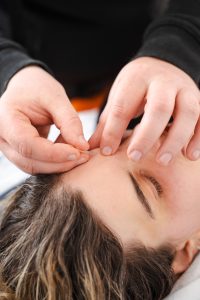
Acupuncture involves inserting very fine, sterile needles into specific points on the body.
If you’ve never experienced it before, the idea can sound much more intimidating than the actual treatment. The needles are very fine, and the sensation is usually quite different from what people imagine when they hear the word “needles”.
The areas treated will depend on why you’re having acupuncture and what your practitioner identifies during your assessment.
This is particularly important when considering Acupuncture for Women’s Health Bideford, because women’s health covers a huge range of different issues.
Two women may both be experiencing menopause, for example, but have completely different symptoms.
One may mainly struggle with hot flushes and night sweats. Another might be experiencing poor sleep, headaches, joint stiffness and changes in mood.
There is no reason their treatment should automatically be identical.
Acupuncture for women’s health
There are many different reasons a woman may look into Acupuncture for Women’s Health Bideford.
At The Hive, medical acupuncture may be considered for symptoms associated with menopause and perimenopause, including hot flushes, disrupted sleep and changes in mood.
It may also be discussed in relation to headaches and migraines, joint pain and stiffness, period pain, nausea, overactive bladder symptoms and certain musculoskeletal problems.
For women after having a baby, acupuncture may also have a role in supporting some problems such as pelvic girdle pain or difficulties returning to normal movement and activity.
That doesn’t mean acupuncture is suitable for every person experiencing these problems.
It also doesn’t mean acupuncture will necessarily improve every symptom.
The starting point should always be an appropriate assessment and an honest conversation about what you’re experiencing.
That’s particularly important with Acupuncture for Women’s Health Bideford, because women’s health symptoms can sometimes have several possible causes.
Acupuncture for menopause
Menopause is probably one of the areas where women are increasingly looking for additional support.
The problem is that menopause isn’t one single experience.
For some women, hot flushes are the main issue. For others, it’s the effect that changing hormones appear to have on sleep, mood, headaches, joint comfort or energy.
Some women also find that menopause changes their relationship with exercise.
Perhaps you used to exercise regularly but now feel exhausted after a poor night’s sleep. Maybe your joints feel stiffer, or you simply don’t feel as comfortable doing the activities you used to enjoy.
This is where Acupuncture for Women’s Health Bideford may form part of a wider plan.
Research has looked at acupuncture for menopause symptoms, including hot flushes, although the evidence varies depending on the symptom and study.
That’s why we prefer to be realistic about what treatment may be able to offer.
If you’re considering Acupuncture for Women’s Health Bideford because of menopause, the first question shouldn’t simply be “How many sessions do I need?”
A better starting point is “What symptoms are actually bothering you, and how are they affecting your life?”
Once you understand that, you can start considering which options may be useful.
This is now backed by evidence!
Acupuncture for period pain?
Period pain is another common reason women may look for additional treatment.
For some women, period pain is relatively mild and manageable. For others, it can interfere with work, exercise, social plans and sleep.
Acupuncture for period pain has been researched, although results are not identical across all studies and individuals.
That means Acupuncture for Women’s Health Bideford shouldn’t be presented as a guaranteed solution for period pain.
If your period pain is severe, has suddenly changed or is regularly stopping you from doing normal activities, it is important to speak to your GP or another appropriate healthcare professional.
Conditions such as endometriosis can cause significant period pain and require proper medical assessment.
Acupuncture can potentially form part of a wider approach once appropriate medical advice has been obtained.
Acupuncture Headaches and migraines
Headaches and migraines can have a significant impact on everyday life.
For some women, hormonal changes can be associated with changes in their headaches or migraines.
A bad headache may make it difficult to concentrate at work, while a migraine can leave you unable to exercise, socialise or carry on with your normal day.
Acupuncture is sometimes used as part of headache and migraine management.
However, not every headache is the same.
If you’re experiencing a new, unusually severe or unexplained headache, it is important to get appropriate medical advice rather than simply assuming acupuncture is the answer.
For someone who has already had their symptoms assessed and is looking for additional support, Acupuncture for Women’s Health Bideford may be something worth discussing.
Sleep problems and menopause
Sleep is another area that can become particularly frustrating during perimenopause and menopause.
You may struggle to fall asleep, wake several times during the night or find yourself waking because you’re too hot.
Sometimes the problem isn’t getting to sleep at all. You may sleep for several hours but wake feeling as though you haven’t properly rested.
Poor sleep can then affect everything else.
You feel tired during the day. Exercise becomes harder. Concentration suffers. You may become less patient. Your motivation can disappear.
This is one reason Acupuncture for Women’s Health Bideford may be considered by women experiencing menopause-related sleep problems.
However, sleep shouldn’t be looked at in isolation.
Your sleep environment, stress levels, exercise, caffeine, alcohol, daily routine and hormonal changes can all influence how well you sleep.
Acupuncture may be one part of the picture rather than the whole answer.
Hot flushes and night sweats
Hot flushes are one of the most recognised symptoms of menopause.
They can happen at inconvenient times, including while you’re working, exercising, socialising or trying to sleep.
For some women they are occasional and manageable. For others, they can happen frequently and become extremely disruptive.
Acupuncture has been investigated as a potential way of managing menopausal hot flushes and related symptoms, although the evidence is mixed.
This is why we take a sensible approach to Acupuncture for Women’s Health Bideford.
We’re not going to tell you that acupuncture will definitely stop your hot flushes.
Instead, we’ll discuss what you’re experiencing, what you’re hoping to achieve and whether acupuncture is an appropriate option to consider.
Joint pain and stiffness
Another change some women notice around menopause is that their joints and muscles don’t feel quite the same.
You may find that your knees, hips, shoulders or hands feel stiffer than they used to.
For someone who wants to stay active, that can be particularly frustrating.
Perhaps you enjoy walking but your knees are becoming uncomfortable. Maybe you want to return to the gym but your shoulders don’t feel as free. Or perhaps you simply notice that getting up and moving around takes more effort than it used to.
Acupuncture for Women’s Health Bideford may be considered as part of a wider approach to managing pain or discomfort.
However, this is also where exercise can become important.
If you’re experiencing joint stiffness, improving strength and maintaining movement may be just as important as managing symptoms.
At The Hive, acupuncture can therefore sit alongside exercise rehabilitation, personal training or appropriate movement work where required.
Postpartum women’s health
Having a baby is a huge physical change, and recovery doesn’t necessarily finish once you’ve been given the all-clear after birth.
Some women experience ongoing aches and pains, pelvic girdle pain or difficulty returning to normal movement.
Others simply feel that their body has changed and they aren’t sure how to start becoming active again.
Acupuncture for Women’s Health Bideford may be considered for certain postpartum symptoms, but it should never replace appropriate assessment where a specific problem needs specialist attention.
For example, pelvic floor problems, significant pelvic pain or concerns about diastasis recti may require assessment from a women’s health physiotherapist or another appropriate professional.
Sometimes the best approach involves several professionals rather than trying to make one treatment do everything.
What does acupuncture actually feel like?
This is one of the biggest questions people have before trying acupuncture.
The simple answer is that it feels different from person to person.
You may feel a small prick as the needle goes through the skin. Once the needle is positioned, you might notice a mild ache, pressure, tingling, heaviness or very little sensation at all.
Some people are surprised by how relaxing they find the treatment.
Others are more aware of the needles and the sensations they create.
There isn’t a right or wrong experience.
If you’re nervous about needles, tell your practitioner. You don’t need to pretend that you’re completely comfortable.
Part of providing good Acupuncture for Women’s Health Bideford is making sure you understand what is happening and feel comfortable communicating with your practitioner throughout the session.
What happens during an appointment?
Your first Acupuncture for Women’s Health Bideford appointment should start with a conversation rather than immediately reaching for the needles.
We’ll want to understand what you’re experiencing, when it started and how it is affecting your everyday life.
Depending on your situation, we may discuss your menstrual cycle, menopause or perimenopause symptoms, sleep, stress, exercise, previous injuries, medication and any previous treatment you’ve tried.
This isn’t about asking questions for the sake of it.
The more we understand about your situation, the better we can decide whether acupuncture is appropriate and what approach may be suitable.
If treatment is appropriate, we’ll explain what we’re planning to do before inserting the needles.
You’ll then have some time to relax while the needles remain in place.
The exact treatment will vary from person to person, which is another reason why Acupuncture for Women’s Health Bideford shouldn’t be treated as a standard routine.
Does acupuncture need to be your only treatment?
Not at all.
In fact, we don’t believe it should automatically be.
If you’re experiencing menopause-related joint stiffness, for example, acupuncture may be one option to consider, but strength training and regular movement can also be important.
If poor sleep is the main issue, it may be worth looking at your daily routine and exercise as well as considering treatment.
If you’re recovering after pregnancy, you may benefit from appropriate rehabilitation and gradual strengthening alongside any hands-on treatment.
This wider approach is an important part of how we use Acupuncture for Women’s Health Bideford at The Hive.
The aim isn’t simply to keep treating a symptom.
Where appropriate, we want to help you understand what may be contributing to the problem and consider what else might help you move forward.
When should you speak to your GP?
Acupuncture shouldn’t be used as a reason to avoid medical advice.
If you have new, unexplained or severe symptoms, it is important to seek appropriate medical assessment.
This is particularly relevant if symptoms are getting worse, affecting your normal activities or causing you significant concern.
Unusual bleeding, unexplained weight loss, persistent or severe pain and other unexplained changes should be properly investigated.
This is particularly important with women’s health because symptoms that appear straightforward can sometimes have an underlying cause that needs medical attention.
Acupuncture for Women’s Health Bideford can potentially sit alongside conventional healthcare, but it shouldn’t replace it.
Common questions about acupuncture for women’s health
Can acupuncture help with menopause?
Acupuncture may help some women manage particular menopausal symptoms, but results vary. It is better considered as one possible part of a wider approach rather than a guaranteed solution.
Can acupuncture help with period pain?
Acupuncture for period pain may help some women manage their symptoms, but severe or persistent period pain should be medically assessed to make sure there isn’t an underlying condition that needs treatment.
Is acupuncture safe?
Acupuncture is generally considered safe when carried out appropriately by a suitably trained practitioner using sterile, single-use needles. Minor side effects such as temporary soreness or bruising can occur.
How many sessions will I need?
There isn’t a standard number of treatments that every woman needs. The appropriate approach depends on your symptoms, how you respond to treatment and what you’re hoping to achieve.
Can acupuncture be combined with exercise?
Yes. Where appropriate, acupuncture can form part of a wider plan that includes exercise, rehabilitation or other treatment. In many situations, continuing to move and build strength is an important part of managing longer-term problems.
Acupuncture for Women’s Health in Bideford
Women’s health isn’t one single subject.
What you need at 25 can be completely different from what you need at 45, 55 or 65.
Your symptoms, lifestyle, previous experiences and goals all matter.
That’s why Acupuncture for Women’s Health Bideford at The Hive is based around the individual rather than a standard treatment routine.
Whether you’re dealing with menopause symptoms, period pain, headaches, poor sleep, joint stiffness or postpartum concerns, we’ll first look at what you’re experiencing and whether acupuncture is appropriate.
If it is, we’ll explain how treatment may fit into your overall plan.
And if another approach would be more suitable, we’ll tell you that too.
At The Hive Health & Well-Being Centre in Bideford, our aim is simple: to help you understand what’s going on and find the right support for you.
If you’re looking for Acupuncture for Women’s Health Bideford or acupuncture North Devon and want to find out whether medical acupuncture could be appropriate for your situation, get in touch with The Hive.
You don’t have to simply put up with symptoms because someone tells you they’re “just part of being a woman” or “just the menopause”.
It’s worth understanding your options and finding the right support.